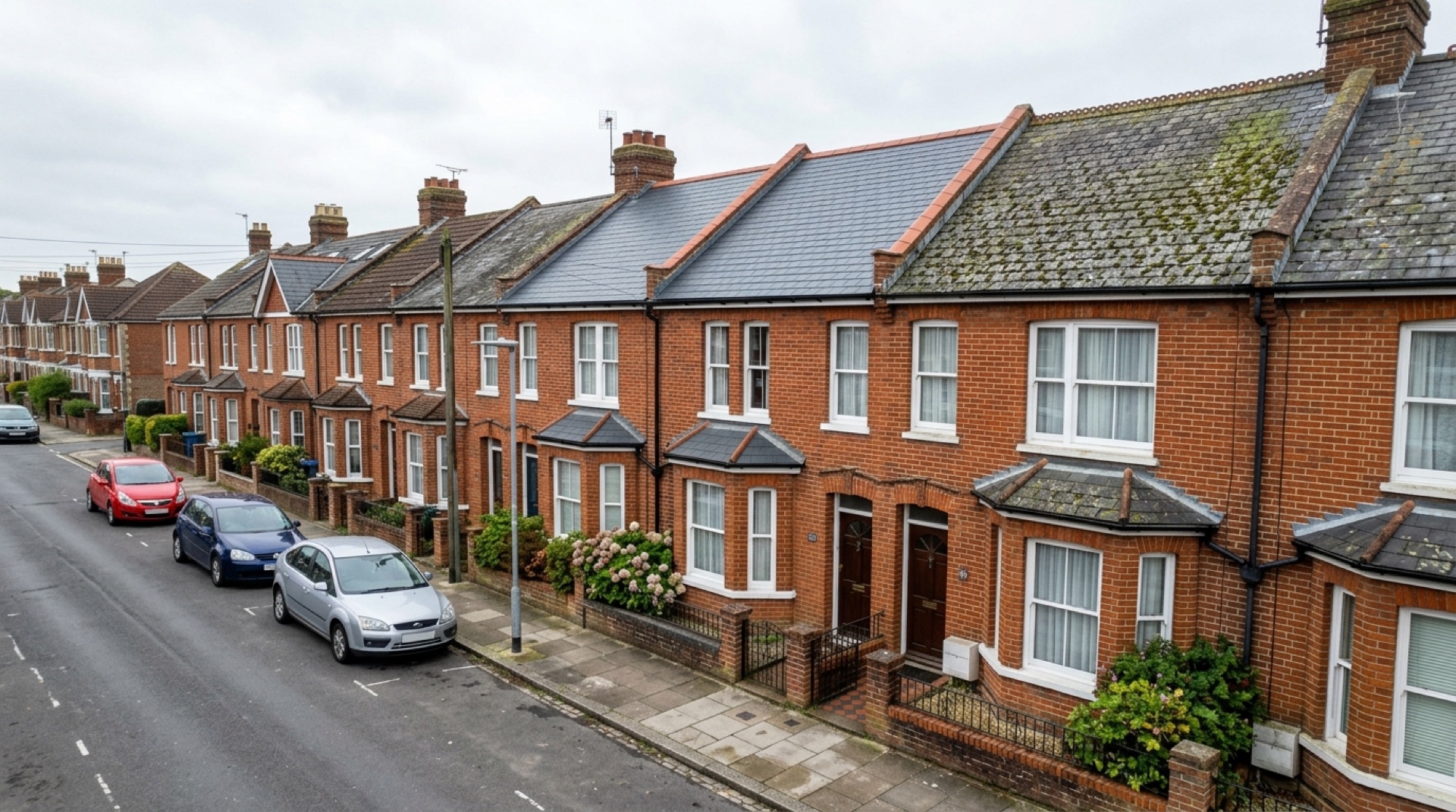
Why moss grows on some roofs and not others
Moss needs damp and shade to establish, so it tends to show up first on north-facing slopes, roofs shaded by trees or neighbouring buildings, and anywhere water is slow to drain — valleys, behind chimneys, along ridge lines. A roof in full sun that dries out quickly rarely has the same problem.
Scraping, treating and preventing regrowth
Removing established moss usually means carefully scraping or brushing it off the tile surface, then treating the roof with a biocide or moss-killing solution to deal with spores and slow regrowth. Rinsing off dead moss and debris afterwards, often at low pressure, tends to be the last step. Ask any installer to walk you through their process before you book.
Moss and tile damage
On some tile types, moss that's allowed to establish for a long period can work its way under tile edges and, combined with repeated freeze-thaw cycles in winter, contribute to tiles lifting or cracking. This is one of the more practical reasons to deal with moss earlier rather than leaving it indefinitely, alongside the general appearance of the roof.
Trees, shade and ongoing maintenance
If a roof is heavily shaded by overhanging branches, moss is likely to return however thoroughly it's cleaned off, since the underlying cause — shade and damp — hasn't changed. Trimming back overhanging branches where possible, alongside periodic cleaning, tends to keep regrowth slower.
Frequently asked questions
Is moss on a roof actually a problem, or just cosmetic?+
Both — it affects how the roof looks, but a heavy build-up can also hold moisture against tiles and, on some roof types, contribute to damage over time if left long enough.
Will moss come back after it's removed?+
It can, particularly on shaded or north-facing roofs. Ask the installer what treatment they use and how that affects regrowth.
Can moss removal damage my tiles?+
Done carelessly, yes — which is why it's worth asking an installer about their method, and pressure level, before agreeing to any work, especially on older or more brittle tiles.
Useful local links
- Southampton City Council – Planning & Building Control — Local planning authority for properties within Southampton itself.
- Fareham Borough Council – Planning Services — Local planning authority covering Stubbington, Sarisbury Green, Swanwick, Sarisbury, Burridge, Park Gate and Lower Swanwick.
- Winchester City Council – Planning — Local planning authority covering Bishop's Waltham.
- GOV.UK – Planning Permission: When You Need It — Government guidance on when planning permission is required for building work in England and Wales.
- Health and Safety Executive – Working at Height — Official guidance on working safely at height, relevant to any roof access.